
Realistic Mirror
Replication
Advanced AI determines the position of the drivers face to adjust the image in real-time to realistically mimic the angular reflection of a real mirror.


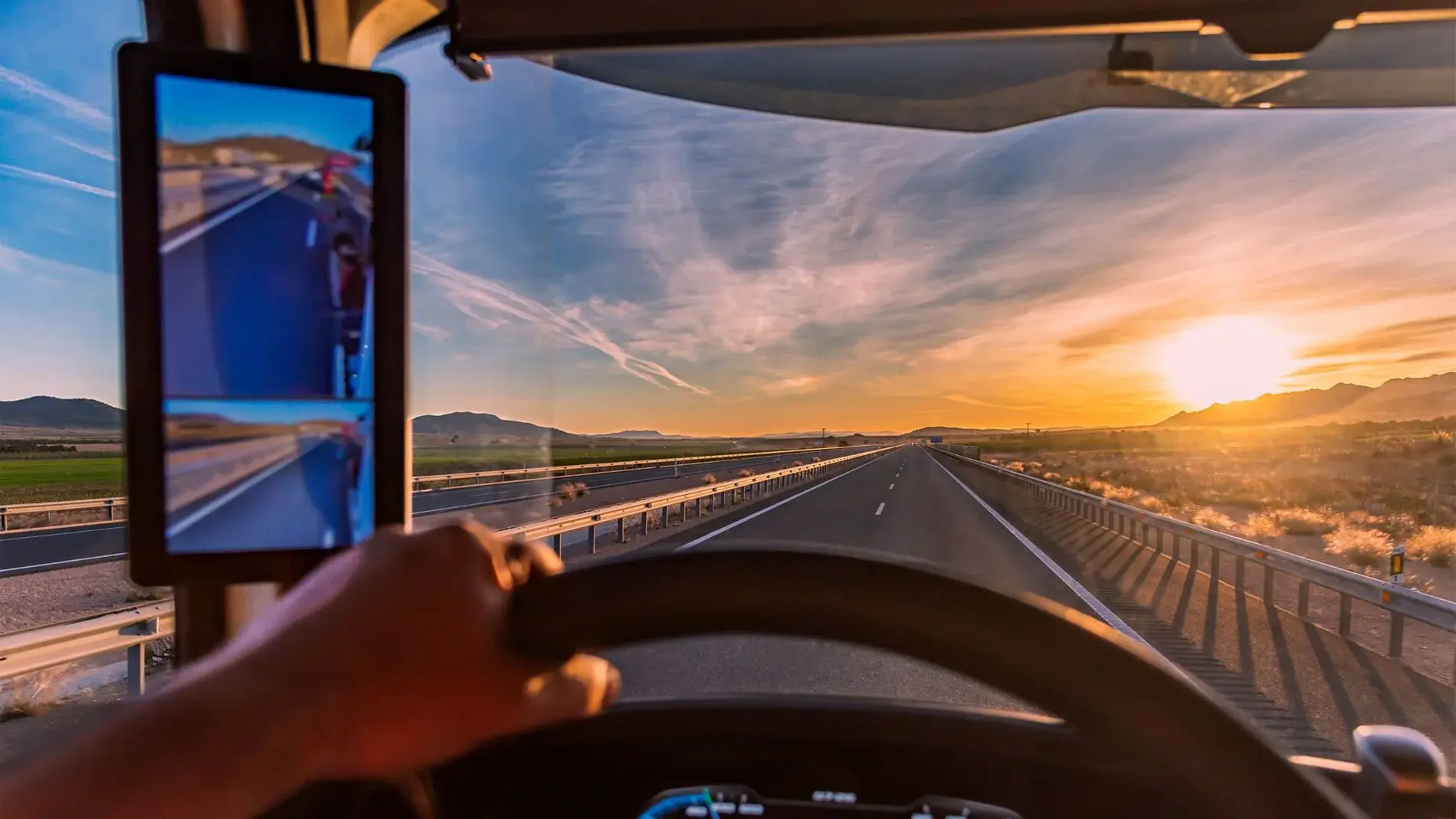
Advanced AI determines the position of the drivers face to adjust the image in real-time to realistically mimic the angular reflection of a real mirror.

Suitable for ADAS (Advanced Driver Assistance Systems) integration, which can enable blind-spot warnings, object detection and lane departure alerts.
Reduce drag to improve fuel efficiency and vehicle stability by replacing bulky side mirrors with compact digital mirrors positioned inside the vehicle.
Reverse and maneuver commercial trailers with ease by incorporating wide camera angles for a complete mirror view of the trailer and wheels.
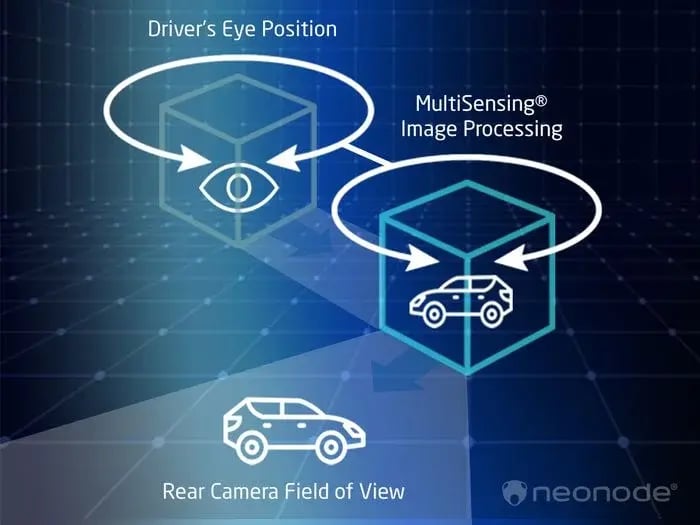
Neonode’s digital mirror augmentation leverages MultiSensing® technology, which integrates data from an array of sensors to transform digital mirrors into dynamic, responsive tools that replicate the behavior of traditional reflective mirrors.
It works by combining visual information from rear-facing cameras with data from interior sensors that determine the spatial orientation of the driver’s face and distance from the display. The data is then processed in a geometric reflection model to adjust the angle of the output image to match the driver’s precise line of sight.
With a small computational footprint, MultiSensing continuously adapts the image in real-time to realistically replicate the principles of specular reflection in the digital display. The result is a fluid, context-aware rearview image that improves situational awareness and road safety.
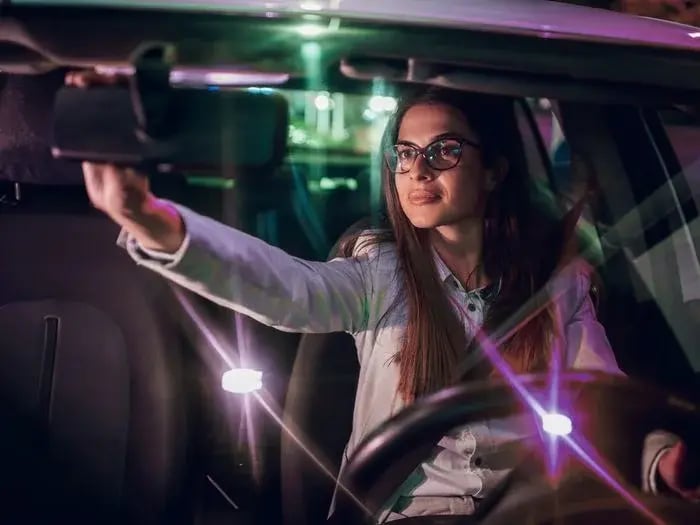
Digital mirrors can provide a rear field of view three times wider than a conventional rearview mirror and can ensure clear visibility even when cargo or rear seat passengers obstruct the line of sight. They can also improve clarity in low light and can eliminate blind spots that traditional mirrors can't cover.
However, digital mirrors do have their drawbacks and users adoption is not always immediate. The static image can feel unfamiliar and can even cause motion sickness in some drivers. MultiSensing addresses this challenge by mimicking the reflective behavior of a traditional rearview mirror, keeping drivers safe and comfortable.